Luna Tropicals
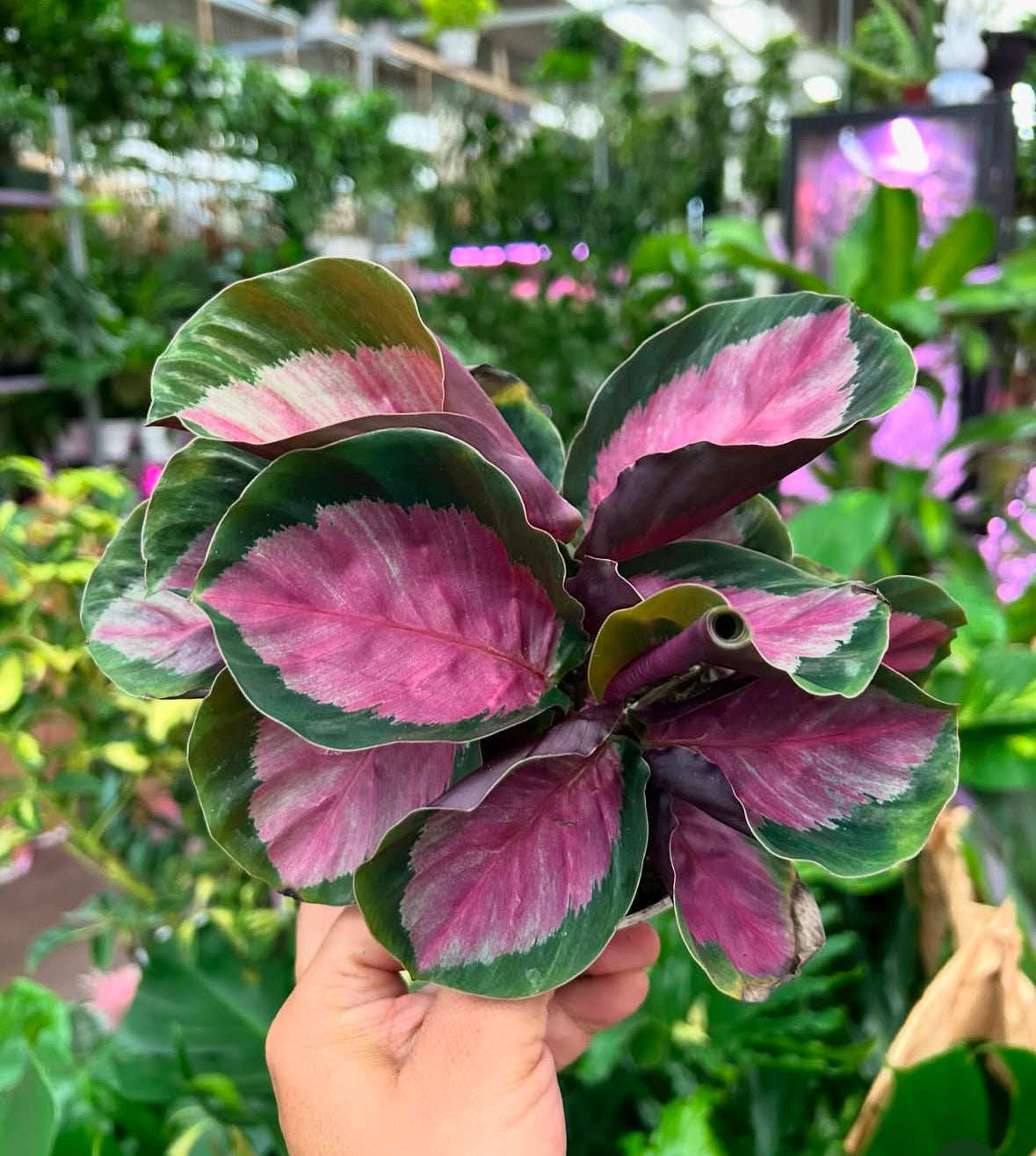
4" Calathea Rosey
4" Calathea Rosey
Couldn't load pickup availability
Calathea Rosey, also known as the Rose-painted calathea, is a striking tropical plant appreciated for its bold, colorful foliage. Caring for this plant requires attention to its environment and specific needs.
Firstly, this plant thrives in bright, indirect light. While it can tolerate lower light conditions, its vibrant colors will fade and growth may slow down. Avoid placing it in direct sunlight, as this can scorch the leaves, causing them to turn brown or get sunburned. Ideal light conditions allow the plant to receive light filtered through sheer curtains or from a distance.
When it comes to watering, Calathea rosey prefers consistently moist but not soggy soil. Water the plant when the top 1 to 2 inches of soil feel dry to the touch. Use room temperature water and avoid using water with high mineral content, such as hard tap water. Rainwater or distilled water is preferable. It's also crucial to avoid letting the plant sit in standing water, as this can lead to root rot. During the warmer months, it might need more frequent watering, but in the winter, reduce the watering frequency as the plant enters a semi-dormant state.
Humidity is an essential factor for Calathea rosey. Being native to tropical environments, it thrives in high humidity. A humidity level of 60% or higher is ideal. If your home is dry, especially in winter, consider using a humidifier, placing the plant on a humidity tray, or grouping it with other plants to create a more humid microclimate. Mist the leaves occasionally, but don’t overdo it, as excessive moisture on the leaves can promote fungal diseases.
The temperature range for Calathea rosey should be between 65°F and 75°F (18°C to 24°C). It does not tolerate cold drafts or temperatures below 60°F (15°C), so make sure to keep it away from chilly windows or air conditioning units.
The soil for this plant should be well-draining yet moisture-retentive. A peat-based potting mix works well, and you can add perlite or orchid bark to ensure good drainage. Repotting should be done every couple of years or when the plant outgrows its container. When repotting, choose a slightly larger pot to prevent root rot, and ensure the new pot has adequate drainage holes.
Fertilizing Calathea rosey is not very demanding. During the growing season, typically spring and summer, feed the plant with a balanced liquid fertilizer diluted to half strength once a month. In the fall and winter, cut back on fertilization, as the plant’s growth slows down during these months.
Occasionally, clean the leaves with a damp cloth to remove dust, as this helps the plant breathe better and improves its overall appearance. Be careful not to use any leaf shine products, as they can clog the pores and harm the plant.
Pruning isn’t necessary for Calathea rosey unless you want to remove any dead or yellowing leaves. Just cut them off at the base of the stem with clean scissors or pruning shears.
One of the challenges of caring for Calathea rosey is dealing with common pests like spider mites, aphids, or mealybugs. Regularly check the plant for signs of infestation, especially under the leaves, and treat with insecticidal soap or neem oil if necessary.
By replicating its tropical environment—consistent moisture, high humidity, indirect light, and warm temperatures—you can ensure that your Calathea rosey thrives and continues to be a beautiful addition to your home.